In 2010, Virginia Clean Cities prepared “Virginia Get Ready: Initial Electric Vehicle Plan” for the Commonwealth of Virginia. This comprehensive study included standards, background information, policy consideration and more.
In 2010, Virginia Clean Cities prepared “Virginia Get Ready: Initial Electric Vehicle Plan” for the Commonwealth of Virginia. This comprehensive study included standards, background information, policy consideration and more.

In 2013, Virginia Clean Cities prepared an Electric Vehicle Readiness Plan for the City of Richmond. Read the “Richmond Electric Vehicle Initiative” report to learn more for possible application in your city.
EV charging stations for multi-unit dwellings (MuDs), such as condos or apartments, provide property owners with a unique way to help attract and retain residents. MuD residents face unique considerations when installing charging stations, ranging from parking and electrical service access to billing and legal concerns. The resources below provide best practices for installing charging stations or get started by downloading the Plug-in Electric Vehicle Charging Infrastructure Guidelines for Multi-unit Dwellings(PDF).
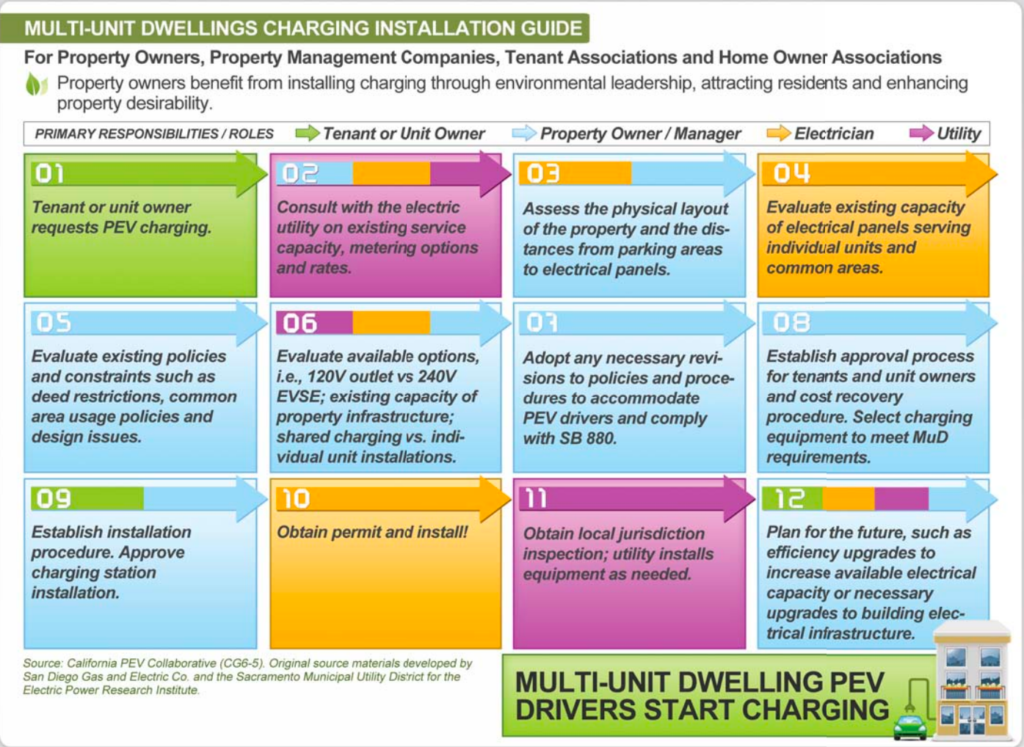
Watch a video showing successes other communities and MuDs have had with EV charging.
Learn about how MuDs across the country have successfully implemented EV charging for their residents using the case studies below.
Outside of the home, work is where people spend the majority of their time with their cars parked. For an electric vehicle owner, this large time frame is a great opportunity to plug in and charge their car and increase their daily commuting range. This not only serves as a convenience and benefit to employees but having an electric vehicle charger can encourage car owners to make the switch to a plug-in electric vehicle. Employers who offer workplace charging can enjoy the following benefits:
Determining if a workplace charging program is right for an organization often begins by gauging employee interest through a survey(PDF). The following resources can help employers understand how workplace charging may support their sustainability portfolio:
Employers should consult their utility, electrical contractor, charging equipment provider, and other stakeholders early in the process to identify and discuss potential challenges. For example, special consideration is needed when determining whether to offer charging at workplaces located in leased facilities.
Charging equipment delivers electrical energy from an electricity source, such as the grid or supplemental solar panels, to a PEV. Level 1, Level 2, and direct-current (DC) fast charging each offer benefits and require different considerations for workplace charging:
Employers seeking to procure charging infrastructure and offer workplace charging must also consider costs associated with equipment, installation, maintenance, and electricity. Costs Associated with Non-Residential Electric Vehicle Supply Equipment(PDF) provides information on the costs associated with purchasing, installing, and owning the equipment. Federal and state laws and incentives can provide discounts and incentives that lower workplace charging costs.
By evaluating goals and needs, employers can select the best workplace solution. Find available charging equipment options using Plug In America’s Get Equipped resource and consult DOE’s workplace charging Request for Proposal Guidance(PDF).
Organizations offering workplace charging can benefit from setting clear guidelines in the areas of administration, registration and liability, sharing, and pricing to help ensure a safe and successful workplace charging experience for all. Learn about how to manage workplace charging.
After employers have installed charging stations at a work site, they may wish to engage employees on how they can take advantage of this employee benefit. DOE’s PEV Outreach Resources for Your Employees(PDF) offers tips for educating employees about why and how they can take advantage of workplace charging. Ride-and-drive events may also be an effective way to introduce employees to PEVs and workplace charging.
Below are some examples of how organizations representing a variety of sectors have made workplace charging available to their employees:
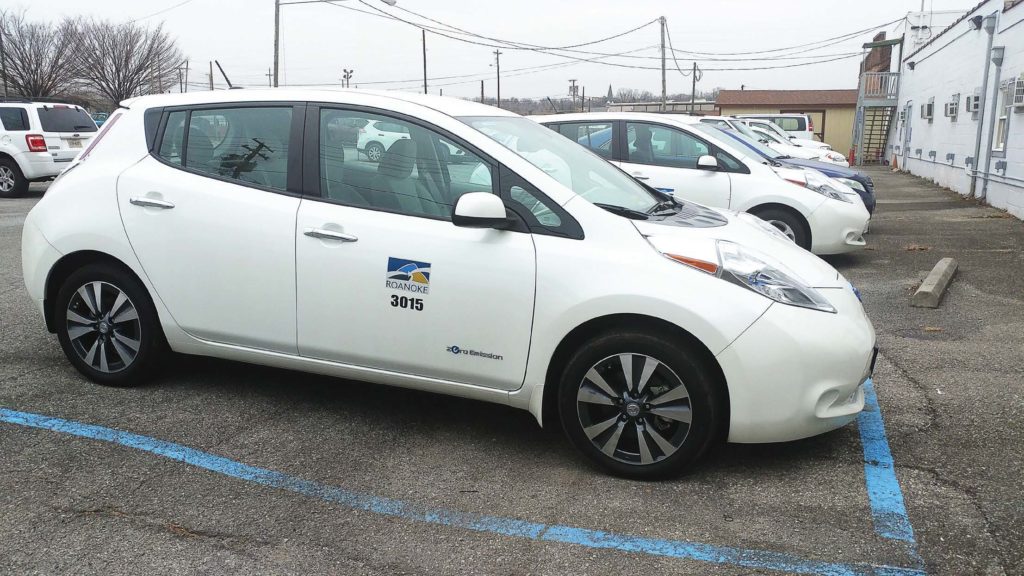
Some Virginia cities are taking a proactive stance in improving air quality and ensuring good stewardship of city resources by taking action in the clean transportation revolution. The City of Roanoke, for example, is using electric vehicles in city operations and helping to highlight that usage by participating in a project called EV-WATTS (Electric Vehicles – Widescale Analysis for Tomorrow’s Transportation Solutions).
The City already uses both hybrid and all-electric vehicles in its fleet. It is reportedly planning to expand its EV footprint in the near future. Additionally, the City has installed “Level 2” and “Level 3” (DC Fast Charging) chargers for public use in its downtown area.
Through EV-WATTS, the City will provide charging and usage data on its electric vehicle operations to the national project supervised by the U.S. Department of Energy. By providing this information, Roanoke is helping to showcase the use of EVs in Virginia and the need for additional resources to support them like further education, research and investment in infrastructure. The expanded use of cleaner transportation options reduces air pollution, contributes to the Commonwealth’s economy and saves money! Cheers to Roanoke for being proactive and helping to show us how it’s done!